
Engine Misfire Causes and What to Do Next
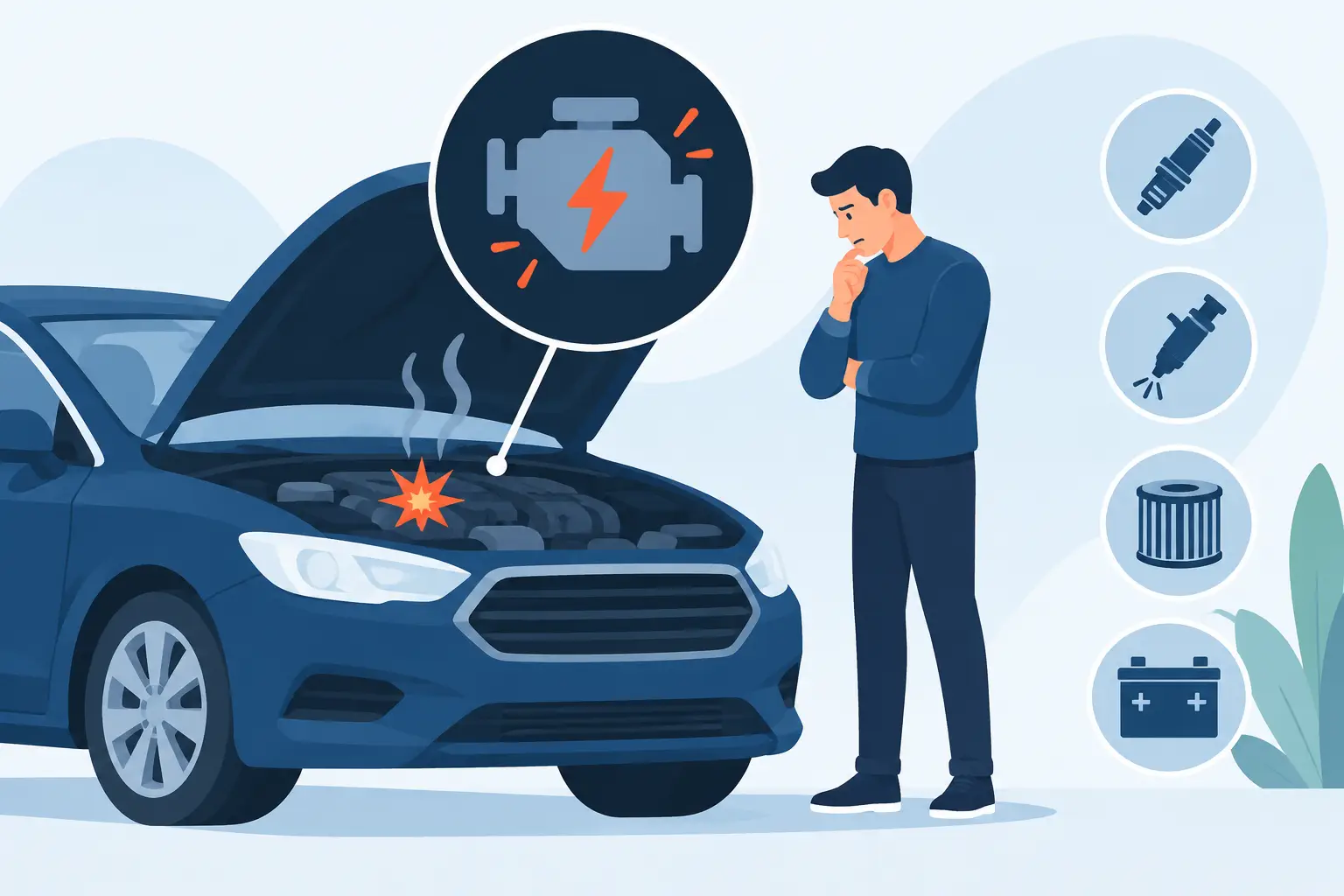
A rough idle at a stoplight, a sudden loss of power on the freeway, or a flashing check engine light can all point to the same problem: a misfire. Engine misfire causes range from a worn spark plug to a fuel or mechanical issue, so the right repair depends on accurate testing rather than guessing. Acting early can protect your engine, improve fuel economy, and help you avoid a much larger repair.
What Happens When an Engine Misfires?
Your engine makes power by burning a carefully measured mix of air and fuel inside each cylinder. That burn needs three things at the right time: compression, fuel, and a strong spark. If one of those pieces is missing or inconsistent, that cylinder may not fire correctly. That is a misfire.
A one-time stumble may not be an emergency, especially if it happens during a cold start and disappears quickly. Repeated misfires are different. They can make the vehicle shake, reduce acceleration, raise emissions, and send unburned fuel into the exhaust system. Over time, that extra fuel can overheat and damage the catalytic converter, which is often far more expensive than resolving the original issue.
Modern vehicles usually store a diagnostic trouble code when the computer detects a misfire. A code may identify a specific cylinder, such as cylinder 3, or indicate random or multiple-cylinder misfires. The code is a useful starting point, but it does not automatically tell you which part needs replacement.
Common Engine Misfire Causes
Worn spark plugs or failed ignition parts
Spark plugs wear with normal use. As the gap increases, the spark may become too weak to reliably ignite the air-fuel mixture. This is one of the most common and straightforward causes of a misfire, particularly when plugs are overdue for replacement.
Many vehicles also use individual ignition coils for each cylinder. A weak or failing coil can cause an intermittent misfire that gets worse under hard acceleration, climbing a hill, or carrying a load. Damaged plug wires, where equipped, and poor electrical connections can create similar symptoms.
Replacing plugs and coils can be a sensible repair when testing supports it. However, replacing every ignition component without diagnosis can add cost without fixing the underlying problem.
Fuel delivery problems
Each fuel injector must deliver the right amount of fuel at the right time. A clogged, leaking, or electrically failed injector can cause a single cylinder to misfire. Fuel pressure that is too low can affect several cylinders, especially when the engine needs more power.
A restricted fuel filter, weak fuel pump, contaminated fuel, or a wiring issue may be part of the problem. Fuel-related misfires sometimes feel like hesitation or surging rather than a constant shake. Because the symptoms can overlap with ignition trouble, professional testing helps separate the two.
Air leaks and sensor faults
Your vehicle’s computer calculates fuel delivery using information from sensors and airflow measurements. A vacuum leak, cracked intake hose, loose air duct, or leaking intake gasket can allow extra air into the engine. That creates a lean mixture, meaning there is too much air and not enough fuel.
A dirty mass airflow sensor, failing oxygen sensor, or faulty manifold pressure sensor may also give the computer inaccurate information. These issues can cause rough idling, hesitation, poor mileage, and a check engine light. They may be more noticeable at idle than at cruising speed, although every vehicle responds differently.
Low compression or internal engine problems
Not every misfire is an ignition or fuel problem. A cylinder also needs adequate compression to burn fuel efficiently. Worn piston rings, a damaged valve, a blown head gasket, timing problems, or a failing camshaft component can reduce compression and cause a persistent misfire.
Mechanical problems are less likely to be solved by a tune-up, which is why a careful diagnosis matters. Compression and leak-down testing can show whether the cylinder is losing pressure and help pinpoint where it is going. Finding this type of issue early may prevent further damage, but the repair path depends on the vehicle’s condition, mileage, and overall value.
Timing and electrical issues
The engine’s valves, spark, and fuel injection all have to happen at precise times. A stretched timing chain, worn timing components, or a timing belt that has slipped can cause misfires along with hard starting, rattling, or weak performance. This deserves prompt attention because some engines can suffer major damage if timing fails completely.
Electrical concerns can be just as disruptive. Corroded connectors, damaged wiring, weak battery voltage, poor grounds, or a charging-system issue can interfere with coils, injectors, and sensors. A vehicle may appear to have a bad ignition coil when the actual issue is the circuit supplying it.
Symptoms That Should Not Be Ignored
A check engine light that stays on should be checked soon, even if the car still seems driveable. A flashing check engine light is more urgent. It usually means the misfire is active enough that the catalytic converter could be at risk. Reduce driving, avoid hard acceleration, and have the vehicle inspected as soon as possible.
Other warning signs include a shaking steering wheel or seat at idle, stumbling when accelerating, reduced power, a popping sound from the exhaust, unusually poor fuel economy, or a gasoline smell. Some misfires come and go, especially when moisture, heat, or engine load triggers the condition. Intermittent does not mean harmless.
If the engine is running very rough, losing significant power, overheating, or showing a flashing warning light, it is safer to stop driving and arrange for service. Continuing to push the vehicle can turn a manageable repair into damage to the converter, engine, or emissions system.
Why a Code Scan Is Only the First Step
It is tempting to read a misfire code and replace the part that seems most likely. For example, a cylinder 2 misfire code does not prove that cylinder 2 needs an injector, spark plug, or coil. The code only confirms that the cylinder is not contributing as it should.
A proper diagnostic process looks at the whole system. A technician may review stored codes and live data, inspect plugs and coils, check for vacuum leaks, test fuel pressure, verify injector operation, and assess compression when needed. Moving a coil or injector to another cylinder may also help confirm whether the component is actually failing.
This approach takes more care than parts swapping, but it supports fair pricing. It helps avoid installing unnecessary components and gives you a clearer explanation of what is wrong, what needs attention now, and what can be monitored.
Can a Misfire Affect a Smog Inspection?
Yes. A misfire can raise tailpipe emissions and trigger the check engine light, both of which can prevent a vehicle from passing an emissions inspection. Even if the light is off at the moment, pending codes or incomplete readiness monitors can still create problems after a recent repair or battery disconnect.
The best approach is to repair the cause of the misfire first, then allow the vehicle to complete its required drive cycles before testing. Clearing a code without correcting the failure does not fix the emissions issue, and the warning light will often return.
For National City drivers, having diagnostics and repair available in the same location can make the process less stressful. Instead of bouncing between shops, you can get a clear assessment, approve only needed repairs, and prepare your vehicle for the road and for emissions testing.
What You Can Do Before Your Appointment
Do not ignore the conditions around the problem. Notice whether the misfire happens only when the engine is cold, while idling, during acceleration, after fueling up, or when the air conditioning is running. Those details help narrow the diagnosis.
Avoid disconnecting the battery just to turn off the check engine light. Doing so can erase useful information and reset emissions monitors. Also avoid adding multiple fuel treatments or replacing several parts at once. A single approved fuel-system cleaner may help in limited situations, but it will not repair a failed coil, leaking gasket, or low-compression cylinder.
Keeping up with manufacturer-recommended spark plug replacement, oil changes, air filter service, and cooling-system maintenance gives your engine the best chance of running cleanly and reliably. Preventive maintenance cannot stop every failure, but it reduces the chance that small wear items turn into a drivability problem at the worst possible time.
If your vehicle is shaking, losing power, or showing a check engine light, schedule a diagnostic visit before the problem grows. Clear testing and necessary-only repairs can get you back on the road with fewer surprises.