
Dashboard Warning Meanings: What to Do Next
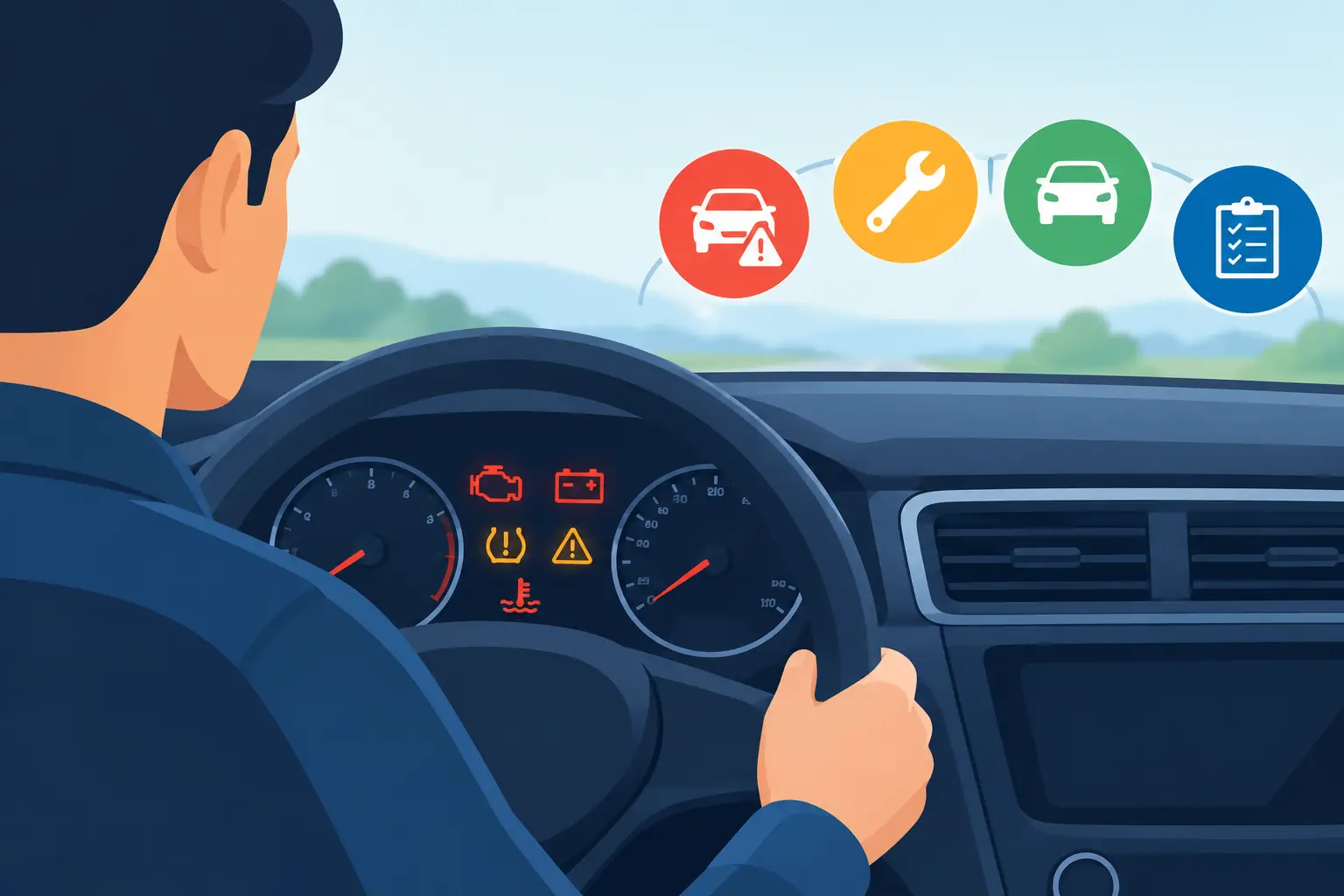
A warning light that appears during a busy commute can turn a normal drive into a stressful guessing game. Understanding dashboard warning meanings helps you make the right next move: pull over now, drive carefully to a repair shop, or schedule service soon before a small issue becomes a breakdown.
Your vehicle’s symbols can vary by make, model, and year, so the owner’s manual is always the final reference. Still, the color, whether the light is flashing, and how the vehicle feels while driving give you useful clues right away.
Dashboard Warning Meanings by Color
Dashboard lights are designed to get your attention in different ways. A light’s color does not diagnose the exact problem, but it helps you judge the urgency.
Red lights usually mean stop safely
A red warning light generally signals a safety issue or a system that could cause serious vehicle damage if you keep driving. Find a safe place to pull over as soon as possible, turn off the engine if appropriate, and arrange an inspection.
Common red warnings include the oil pressure light, engine temperature light, brake warning light, battery or charging-system light, and seat belt reminder. A red seat belt light has an easy fix. A red oil or overheating light does not. Continuing to drive with low oil pressure or an overheated engine can lead to expensive engine damage.
Yellow or amber lights mean check it soon
Yellow and amber lights usually indicate that a system needs attention but may not require an immediate stop. The check engine light, tire pressure light, ABS light, traction control light, and maintenance reminder are often yellow.
Do not ignore them simply because the car still runs. A yellow light may point to a minor sensor issue, but it can also indicate a developing mechanical problem, emissions concern, or safety system fault. Schedule a diagnostic check, especially if the light remains on after restarting the vehicle.
Green, blue, and white lights are usually informational
These colors commonly confirm that a feature is active. Headlights, high beams, turn signals, cruise control, and some driver-assistance features use green, blue, or white indicators.
A blue high-beam symbol is normal when high beams are on. If an informational light is unfamiliar, check the owner’s manual before assuming it is a problem.
The Warning Lights You Should Never Ignore
Some dashboard symbols deserve quicker action than others. Pay attention to changes in vehicle performance, strange smells, smoke, noises, or fluid leaks along with the warning light.
Oil pressure warning light
This icon often looks like an old-fashioned oil can. It means the engine may not have enough oil pressure to protect internal parts. Low oil level is one possible cause, but so are a failing oil pump, clogged passage, or pressure sensor problem.
Pull over safely and shut off the engine. Checking the oil level after the engine has cooled can provide useful information, but do not keep driving just because the dipstick shows some oil. The warning is about pressure, not only oil quantity.
Engine temperature warning light
A thermometer symbol or red temperature light means the engine is overheating. Turn off the air conditioning, pull over safely, and shut down the engine. Do not remove a hot radiator cap. Pressurized coolant can cause severe burns.
Overheating can come from low coolant, a leak, a stuck thermostat, a cooling fan failure, or a water pump issue. Waiting for the engine to cool before checking anything is safer, but a professional inspection is the best way to find the cause and prevent repeat overheating.
Brake warning light
A brake light may mean the parking brake is engaged, so check that first. If the light stays on after releasing it, the vehicle may have low brake fluid, worn brake components, or a hydraulic brake problem.
If the pedal feels soft, sinks toward the floor, pulls to one side, or braking performance changes, do not continue driving. Brake issues are not a wait-and-see repair.
Battery or charging-system light
The battery-shaped symbol often means the vehicle’s charging system is not working correctly. The battery itself may be weak, but a failing alternator, loose connection, worn belt, or electrical issue can also trigger the light.
Your car may continue running for a short time on battery power, then stall once the battery is drained. Reduce electrical use when safe to do so, such as unnecessary accessories, and get the vehicle inspected promptly rather than risking a roadside breakdown.
What a Check Engine Light Really Means
The check engine light is one of the most misunderstood dashboard warnings. It can appear because of something relatively simple, such as a loose fuel cap, or because of a problem affecting the engine, fuel system, ignition, or emissions controls.
If the check engine light is steady and the vehicle runs normally, make an appointment for diagnostics soon. Tighten the fuel cap if it was loose, then allow a few drive cycles to see whether the light turns off. Do not erase the code before diagnosis. The stored information helps identify the cause.
If the check engine light is flashing, treat it as urgent. A flashing light often indicates an active engine misfire that can damage the catalytic converter. Avoid hard acceleration, pull over if the engine is shaking or losing power, and have the vehicle checked right away.
For California drivers, a check engine light can also affect a required smog inspection. Resolving the underlying issue before testing saves time and helps avoid an unsuccessful visit.
Tire Pressure, ABS, and Traction Control Lights
These lights can feel less urgent than an overheating warning, but they directly affect safe handling and braking.
The tire pressure monitoring system light looks like a tire cross-section with an exclamation point. It may mean one or more tires are underinflated, overinflated, damaged, or that the system has a sensor fault. Check pressures when tires are cold and use the pressure listed on the driver’s door placard, not the maximum pressure printed on the tire sidewall. If a tire is visibly low, damaged, or losing air, do not rely on adding air as a long-term fix.
An ABS light means the anti-lock braking system may be unavailable. In many vehicles, regular braking still works, but the wheels may lock during hard stops. An illuminated traction control light can mean the system is actively helping during slippery conditions, which is normal when it flashes briefly. If it stays on continuously, the system may have a fault or may have been switched off.
When a Light Appears While You Are Driving
Start by staying calm and noticing what changed. Is the light red, yellow, or flashing? Did the engine lose power? Is there a burning smell, steam, smoke, vibration, or an unusual sound? Those details help determine whether you need a tow or can drive carefully for service.
Avoid the common mistake of covering a warning light with tape or assuming it will disappear on its own. Some lights turn off after a temporary condition passes, but repeated warnings are the vehicle telling you something needs attention.
If you are unsure whether it is safe to drive, choose caution. Pull over where it is safe, consult the owner’s manual, and call a qualified repair shop. For drivers in National City, Best Smog Station & Auto Repair can inspect warning lights, explain the results clearly, and recommend only the repairs your vehicle needs.
Why Accurate Diagnostics Matter
A dashboard light identifies a system, not a specific repair. For example, a check engine light does not automatically mean you need an oxygen sensor, and a battery light does not automatically mean you need a new battery. Replacing parts based on guesswork can cost more and fail to solve the real problem.
Proper diagnostics combine scan-tool information with visual inspection, testing, and the vehicle’s symptoms. A technician may check charging voltage, fluid levels, brake condition, sensor readings, wiring, leaks, or stored fault codes before recommending work. That process takes a little more care upfront, but it helps avoid unnecessary repairs and gets you back on the road with more confidence.
The best response to a warning light is rarely panic and never guesswork. Address urgent red or flashing lights immediately, schedule service for persistent yellow warnings, and give the technician a clear description of what you saw and felt while driving. That simple information can make the repair faster, safer, and less stressful.