
How to Check Engine Misfire Before It Gets Worse
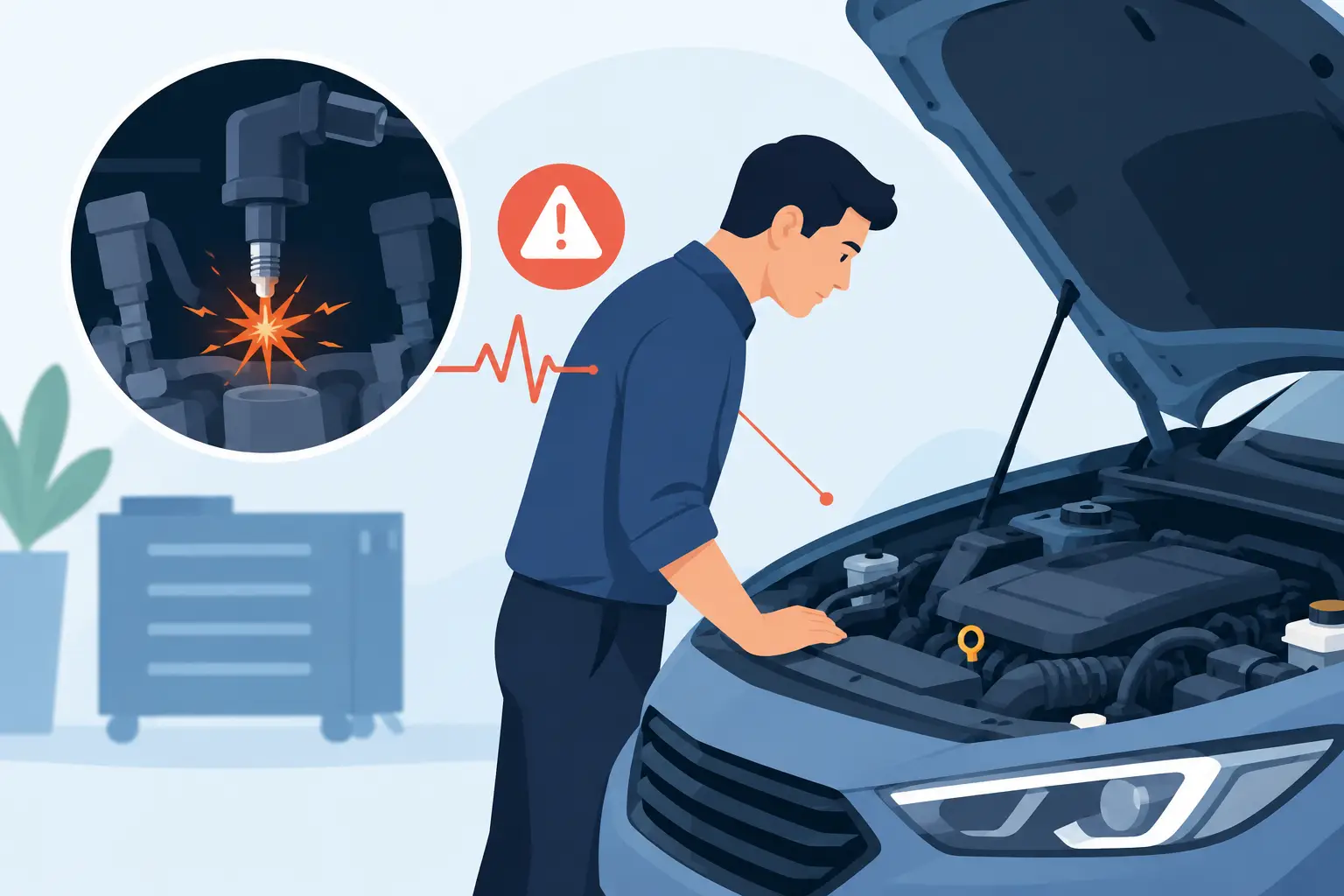
A misfire can feel like a small hesitation at a stoplight, a rough idle in the driveway, or a sudden loss of power when you need to merge onto the freeway. Knowing how to check engine misfire early can help you avoid wasted fuel, a failed smog inspection, and potentially expensive damage to your catalytic converter.
A misfire means one or more engine cylinders are not burning fuel correctly. The cause may be as straightforward as a worn spark plug, but it can also involve an ignition coil, fuel injector, vacuum leak, sensor problem, or an internal engine issue. The goal is not to guess at parts. It is to identify the pattern, gather useful information, and know when a professional diagnosis is the safest next step.
Start With the Symptoms of an Engine Misfire
The way your vehicle behaves can point a technician in the right direction. A steady rough idle, shaking steering wheel, sputtering acceleration, reduced fuel economy, or a noticeable gasoline smell can all be signs of a misfire. Some drivers also hear popping from the exhaust or feel the vehicle stumble when climbing a hill or carrying passengers.
Pay attention to when the problem happens. A misfire that only appears during hard acceleration may be related to weak ignition components under load. One that happens mostly at idle can be caused by a vacuum leak, dirty throttle body, or a fuel delivery issue. If it occurs after rain or a car wash, moisture around ignition components may be involved.
A flashing check engine light is the warning you should take most seriously. It usually means the misfire is active enough that unburned fuel may be entering the exhaust system. Continuing to drive can overheat and damage the catalytic converter. Pull over safely, avoid hard acceleration, and arrange for the vehicle to be inspected as soon as possible.
Check the Check Engine Light and Scan for Codes
The most useful first tool for checking an engine misfire is an OBD-II scanner. Most vehicles sold in the United States since 1996 have an OBD-II diagnostic port, usually located below the dashboard near the steering column. A basic scanner can read diagnostic trouble codes and give you a clearer starting point.
Misfire-related codes often begin with P0300 through P0308. P0300 means the computer detected a random or multiple-cylinder misfire. A code such as P0301, P0302, or P0306 generally identifies the cylinder where the misfire was detected. For example, P0304 points to a misfire on cylinder four.
That code identifies the symptom, not automatically the failed part. A P0302 code does not prove that cylinder two needs a spark plug or ignition coil. The cause could be a faulty fuel injector, a wiring problem, low compression, an intake leak near that cylinder, or a mechanical issue. Replacing parts based on the code alone can become expensive fast.
If you scan the vehicle yourself, write down every code before clearing anything. Related codes for fuel trim, oxygen sensors, camshaft timing, or injector circuits can provide valuable clues. Clear the codes only after recording them, then see whether they return and under what driving conditions.
Perform a Basic Visual Inspection
With the engine turned off and cool, look for obvious issues under the hood. You do not need to disassemble the engine to spot many common concerns. Check for loose electrical connectors around ignition coils and fuel injectors, cracked vacuum hoses, damaged wiring, or signs of rodents chewing through insulation.
If your vehicle uses visible ignition wires, inspect them for cracks, burns, loose boots, or oil contamination. On coil-on-plug systems, each cylinder has its own ignition coil installed directly over the spark plug. Look for broken connectors, corrosion, or oil pooled in the spark plug wells. Oil in these areas can cause repeated ignition problems and may indicate a leaking valve cover gasket.
Also look for fluid leaks, a loose air intake tube, or a disconnected hose between the air filter box and engine. Unmetered air entering the intake can upset the air-fuel mixture and create a rough-running condition that feels like a misfire.
Do not remove spark plugs, coils, or fuel-system components if you are not comfortable with the procedure. Modern ignition systems can produce high voltage, and fuel components need careful handling. A visual check is useful. Improvised testing is not worth the risk.
Notice Whether the Misfire Moves or Stays Put
A technician may test a suspected ignition coil by moving it to a different cylinder, clearing the code, and checking whether the misfire code follows the coil. If a P0302 becomes a P0304 after the coil is moved from cylinder two to cylinder four, that is strong evidence the coil is failing.
This test can be effective, but it depends on the vehicle and the engine layout. Some coils are easy to access; others require removing intake components or other parts. The same method can sometimes be used for spark plugs or fuel injectors, but injector testing is more involved and may require specialized equipment.
A misfire that stays on the same cylinder after ignition components have been checked needs deeper testing. A repair shop may test fuel injector pulse and flow, inspect wiring with a meter, check for intake leaks, and perform a compression or leak-down test. These tests help separate a replaceable component problem from an internal engine concern.
Consider Recent Service and Driving Conditions
Recent repairs can offer useful context. If the misfire began right after spark plugs were replaced, the issue could involve an improperly installed plug, a damaged coil boot, a loose connector, or the wrong plug type. If it began after running very low on fuel, debris in the fuel system or a weak fuel pump may be worth checking.
Fuel quality can matter, especially if the problem started immediately after filling up. However, bad gas is often blamed too quickly. A true fuel-quality issue may affect multiple cylinders and cause poor performance, but a cylinder-specific code more often leads back to ignition, injection, compression, or an air leak.
Mileage matters as well. Spark plugs have service intervals, and worn plugs make ignition coils work harder. Neglecting a basic tune-up can turn a relatively affordable maintenance item into a larger repair. For vehicles used for rideshare work, long commutes, deliveries, or fleet service, addressing early symptoms helps reduce unexpected downtime.
What Not to Do When You Suspect a Misfire
Avoid repeatedly revving the engine to “clear it out.” If the problem is active, extra fuel and heat can worsen catalytic converter damage. Do not keep driving for days with a flashing check engine light, even if the vehicle still seems usable.
It is also wise to avoid replacing every spark plug, coil, and injector at once without testing. Sometimes multiple maintenance items are due, but necessary-only repairs begin with confirming the actual cause. A proper diagnosis protects your budget and makes the repair more likely to last.
Fuel additives may help in limited situations involving mild injector deposits, but they will not repair a failed coil, broken wire, worn spark plug, burned valve, or low compression. Treat additives as maintenance products, not a substitute for diagnosis.
When to Bring Your Vehicle In for Diagnosis
Schedule service promptly if the check engine light is flashing, the vehicle shakes heavily, power drops significantly, or you smell raw fuel. You should also have a steady check engine light inspected if the misfire returns after clearing codes or if fuel economy has noticeably fallen.
At Best Smog Station & Auto Repair, a misfire diagnosis begins with the vehicle’s codes, symptoms, and basic system checks rather than assumptions. From there, testing can confirm whether the issue involves spark, fuel, air, wiring, timing, or engine compression. That process helps keep repairs clear, targeted, and practical.
A rough-running engine rarely fixes itself. Catching the problem while it is still an occasional hesitation can protect your vehicle, reduce stress on your commute, and help you get back to driving with confidence.